


What Is Plutus? The-Heart-Of-Smart-Contracts
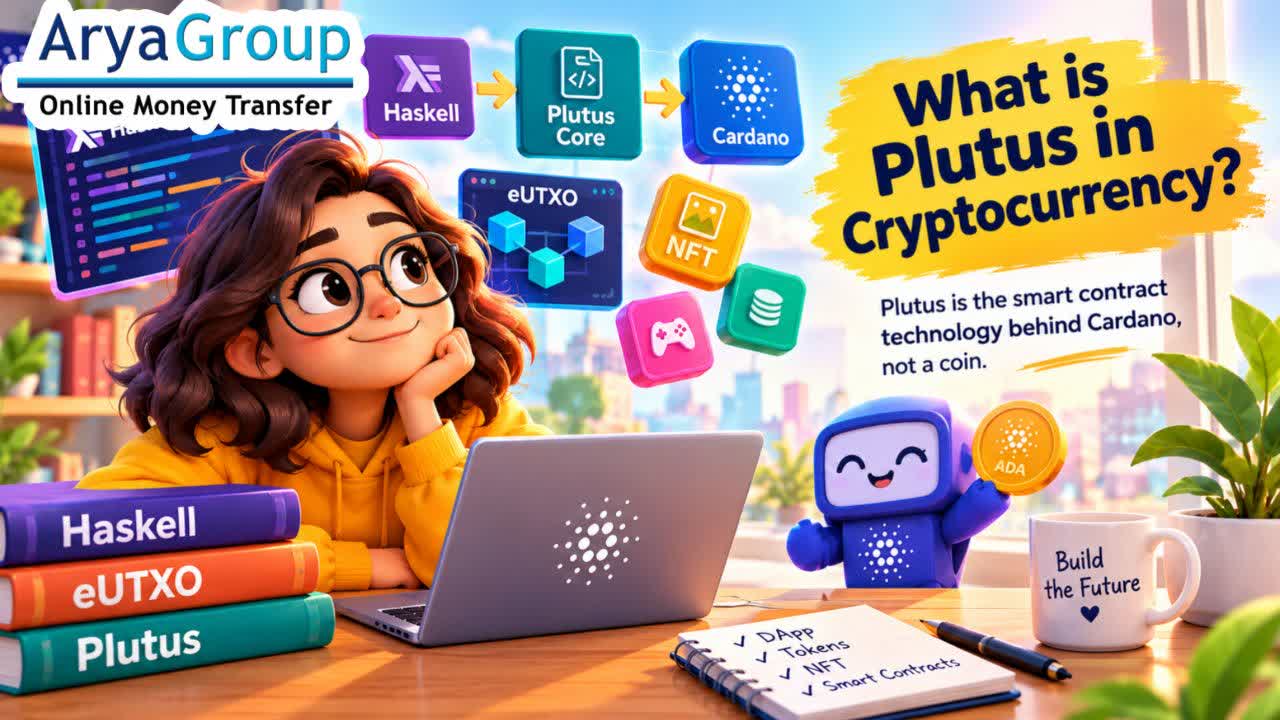
What Is Plutus in Cryptocurrency?
Plutus is one of the important technologies behind smart contracts on the Cardano blockchain. Although it is sometimes mentioned alongside cryptocurrencies and digital assets, Plutus itself is not a cryptocurrency or a tradable coin. Instead, it is a smart-contract development and execution environment associated with Cardano.
At its core, Plutus allows developers to create programs that define how blockchain transactions should behave. These programs can be used to build decentralized applications (DApps), financial systems, token-related applications, and other blockchain services without depending on a traditional central intermediary. Cardano describes Plutus as a purpose-built smart-contract language based on Haskell.
How Does Plutus Work?
Plutus is closely connected to Cardano's extended UTXO, or eUTXO, accounting model. In simple terms, transactions on Cardano consume existing unspent outputs and create new outputs. Plutus adds programmable rules to this system.
A developer can create a validator script that determines whether a particular transaction meets the required conditions. When someone attempts to spend funds protected by that script, Cardano's network evaluates the transaction and the script's rules.
This approach is different from the account-based model used by some other major blockchains. On Cardano, a smart contract primarily acts as a validator: it approves or rejects a proposed transaction rather than independently initiating actions.
Plutus and Haskell
One of the defining characteristics of Plutus is its relationship with Haskell, a functional programming language known for strong typing and a mathematical approach to programming.
Plutus was designed around Haskell because this programming style can make software behavior easier to reason about and test. For blockchain applications, where mistakes can potentially affect valuable digital assets, predictable program behavior is particularly important.
Plutus contracts can use Haskell-based development tools, while the resulting on-chain logic is compiled into Plutus Core, the lower-level language executed by Cardano's blockchain infrastructure.
What Is Plutus Core?
Plutus Core is the lower-level scripting language that Cardano nodes use when validating Plutus-based smart-contract logic.
Developers generally do not write Plutus Core directly. Instead, higher-level code is compiled into a form that can be executed by the blockchain.
This separation is useful because developers can work with a more expressive programming environment while Cardano's infrastructure executes a more compact representation of the contract.
In other words, a simplified way to understand the relationship is:
Developer code → compilation → Plutus Core → Cardano transaction validation
Cardano documentation explains that Plutus Core forms the foundation for scripts that validate transactions and control certain token-related operations.
What Can Plutus Be Used For?
Plutus can support many types of decentralized applications on Cardano.
Decentralized Applications
Developers can use smart contracts to create DApps whose important rules are enforced by blockchain-based code rather than a centralized database.
Examples can include decentralized financial applications, marketplaces, token systems, NFT-related applications, and other services that require programmable transaction rules.
The exact design of each application depends on its developers and the smart-contract logic they create.
Token Minting and NFTs
Plutus can also be used when developers need more sophisticated rules for creating or destroying native assets.
Cardano's native-asset system uses minting policies to define the conditions under which tokens can be created or burned. These policies can be implemented using smart-contract technology, allowing developers to establish specific rules around digital assets.
This has helped make programmable tokens and NFTs an important part of Cardano's broader ecosystem.
Why Is Plutus Important?
One major reason Plutus is important is that smart contracts can automate rules without requiring every transaction to be approved manually by a central organization.
Suppose an application requires a digital asset to be released only after certain conditions are satisfied. Instead of relying entirely on a company or intermediary to decide whether those conditions have been met, the rules can be represented in code.
The blockchain can then evaluate transactions against those rules.
Plutus was also designed with an emphasis on safety and predictability. Cardano's documentation highlights the benefits of functional programming and the ability to use related development approaches across on-chain and off-chain components.
Plutus and the Cardano eUTXO Model
Understanding Plutus becomes easier when its relationship with Cardano's eUTXO model is clear.
Traditional UTXO systems track unspent transaction outputs. Cardano extends this concept by allowing outputs to contain additional data and logic.
That means a transaction can be evaluated according to the information contained in its inputs, outputs, and associated scripts.
One interesting feature of this design is that developers can often evaluate whether a transaction should succeed before submitting it to the blockchain. However, a transaction can still fail if another transaction consumes an input it was expecting to use.
This architecture gives Cardano smart contracts a distinctive structure compared with account-based blockchain systems.
Is Plutus the Same as Cardano?
No. Plutus and Cardano are related, but they are not the same thing.
Cardano is the blockchain network and ecosystem that uses ADA as its native cryptocurrency.
Plutus is a smart-contract technology used for creating programmable applications and transaction rules on Cardano.
A simple comparison is:
-
Cardano: the blockchain ecosystem
-
ADA: Cardano's native cryptocurrency
-
Plutus: smart-contract development technology
-
Plutus Core: the lower-level scripting language used for execution
This distinction is important because newcomers sometimes assume that Plutus is another cryptocurrency. It is not.
Plutus Compared With Other Cardano Smart-Contract Languages
Plutus remains an important part of Cardano's smart-contract history and developer ecosystem, but it is no longer the only option available to developers.
Cardano's current developer resources also list technologies such as Aiken, Plutarch, OpShin, Scalus, Pebble, and Marlowe, each aimed at different programming backgrounds and development requirements.
Aiken, for example, is a newer language designed specifically for Cardano smart contracts and is intended to offer a simpler developer experience than traditional Plutus development for many developers.
This means developers can choose tools according to their existing programming knowledge, desired performance, and project requirements.
Advantages of Plutus
Plutus offers several characteristics that make it useful for blockchain development:
-
It is designed specifically for Cardano smart contracts.
-
It is closely connected to Haskell and functional programming.
-
Its contracts can define detailed transaction-validation rules.
-
It works with Cardano's eUTXO architecture.
-
It can support sophisticated token and NFT-related logic.
-
Its development philosophy places considerable emphasis on correctness and predictable behavior.
These characteristics make Plutus particularly relevant for developers who want to build applications where transaction rules need to be clearly defined and enforced.
Limitations and Challenges
Plutus is not necessarily the easiest blockchain programming technology for beginners.
A developer who wants to work with traditional Plutus development may need to understand Haskell, functional programming concepts, Cardano's eUTXO model, transaction construction, and blockchain-specific concepts.
Cardano's developer portal notes that the original Plutus/Plinth approach offers the power of Haskell's type system but also comes with a relatively steep learning curve and can produce larger scripts than some newer approaches.
For this reason, newer developers may consider alternatives such as Aiken, depending on their goals and technical background.
The Future Role of Plutus
Plutus remains an important part of understanding Cardano's smart-contract architecture. Even as newer languages and tools appear, Plutus Core remains part of the underlying execution environment for Cardano smart contracts.
The wider Cardano ecosystem is increasingly giving developers several choices rather than forcing every project into a single programming language.
This evolution could make Cardano more accessible to developers with different technical backgrounds while preserving the underlying principles of its smart-contract system.
Final Thoughts
Plutus is best understood as a smart-contract development and execution technology for the Cardano blockchain, not as a cryptocurrency.
Its connection to Haskell, its use with Cardano's eUTXO model, and its ability to create programmable transaction rules have made it an important component of Cardano's decentralized application ecosystem.
For newcomers, the easiest way to remember the concept is simple: Cardano provides the blockchain, ADA is its native cryptocurrency, and Plutus provides technology for building smart contracts on that blockchain.
As Cardano's developer ecosystem continues to evolve, Plutus remains an important foundation for understanding how programmable blockchain applications can be designed and executed.

Add New Comment