


What Is Tether's Attestation Report?
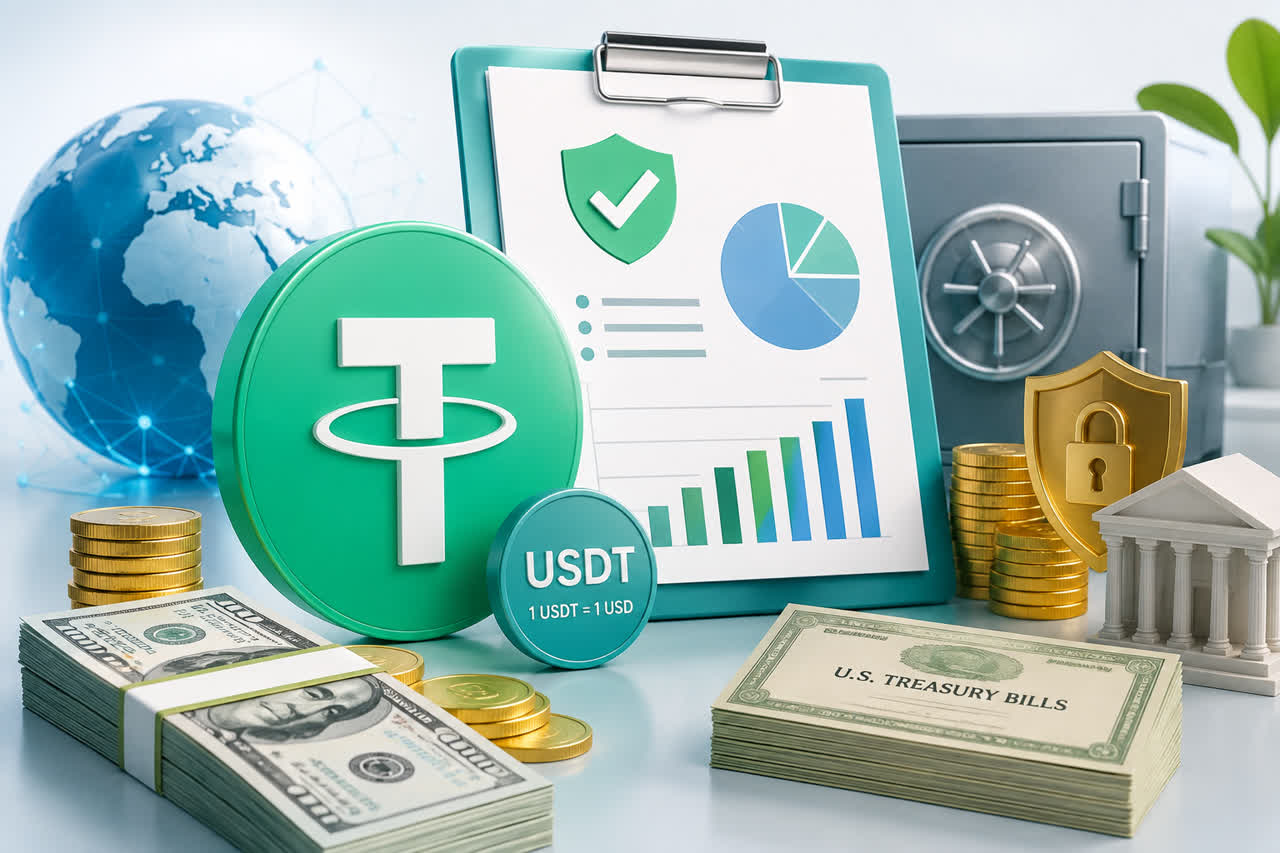
What Is Tether's Attestation Report?
Introduction
Tether (USDT) is the world's largest stablecoin by market capitalization. Unlike cryptocurrencies such as Bitcoin or Ethereum, USDT is designed to maintain a value close to one U.S. dollar. To build confidence among users, Tether regularly publishes Attestation Reports that provide information about the assets backing USDT in circulation.
Although many investors confuse an attestation with a financial audit, the two are not the same. Understanding what an attestation report is—and what it is not—is essential for anyone who uses or invests in USDT.
What Is an Attestation Report?
An Attestation Report is an independent verification prepared by an accounting firm that examines whether Tether's reported reserve assets match the amount of USDT tokens issued at a specific point in time.
The report is intended to assure users that Tether has sufficient reserves to back the circulating supply of USDT. These reserves typically include:
- U.S. Treasury Bills
- Cash and cash equivalents
- Reverse repurchase agreements
- Money market funds
- Secured loans (where applicable)
- Other short-term investments
Rather than reviewing every financial transaction throughout the year, an attestation verifies the company's financial position on a particular reporting date.
Why Does Tether Publish Attestation Reports?
Transparency is one of the biggest concerns surrounding stablecoins. Since millions of people rely on USDT for trading, payments, and cross-border transfers, users want assurance that every token is properly backed.
Tether publishes quarterly attestation reports to:
- Increase transparency.
- Demonstrate reserve adequacy.
- Strengthen market confidence.
- Meet growing regulatory expectations.
- Reduce uncertainty during periods of market volatility.
These reports have become an important source of information for investors, exchanges, and regulators.
Attestation vs. Audit
Many people mistakenly believe an attestation report is a complete financial audit. In reality, there are important differences.
An attestation:
- Reviews specific financial information at a single point in time.
- Confirms whether reported reserves support the outstanding USDT supply.
- Has a narrower scope.
- Is generally completed more quickly.
A financial audit:
- Examensively examines a company's financial statements and internal controls.
- Reviews transactions over an entire reporting period.
- Provides broader assurance regarding financial reporting.
- Requires significantly more time and procedures.
Because of these differences, some critics continue to call for Tether to undergo a full independent audit.
What Information Is Included?
A typical Tether Attestation Report includes:
- Total USDT issued.
- Total reserve assets.
- Breakdown of reserve composition.
- Percentage of assets held in U.S. Treasury Bills.
- Other cash-equivalent investments.
- Statement from the independent accounting firm.
- Reporting date.
This information helps users understand how Tether manages the assets backing its stablecoin.
Why Is It Important?
Attestation reports play a significant role in maintaining trust in USDT. If investors lose confidence in the reserves backing a stablecoin, its price could temporarily deviate from its intended value.
By regularly publishing reserve information, Tether aims to reassure users that it can honor redemption requests and maintain the stability of USDT even during periods of high market activity.
The reports also help institutional investors evaluate risk before using USDT for trading, settlements, or treasury management.
Limitations of Attestation Reports
Although attestation reports improve transparency, they also have limitations.
For example:
- They represent only a snapshot in time.
- They do not review every company transaction.
- They are not equivalent to a full financial audit.
- They cannot guarantee future financial conditions.
- They rely partly on information provided by the company.
For these reasons, investors should view attestation reports as one important piece of information rather than the only measure of Tether's financial health.
Conclusion
Tether's Attestation Report is an important transparency document that verifies whether the company's reported reserves adequately support the circulating supply of USDT at a given date. While it is not a substitute for a comprehensive financial audit, it provides valuable insight into the composition and size of Tether's reserves.
As stablecoins continue to play a larger role in the global financial system, attestation reports are likely to remain an essential tool for building trust, supporting regulatory compliance, and helping users make informed decisions.
Add New Comment