


What Is Transaction Backrunning?
Transaction Backrunning in Cryptocurrency
What Is Transaction Backrunning?
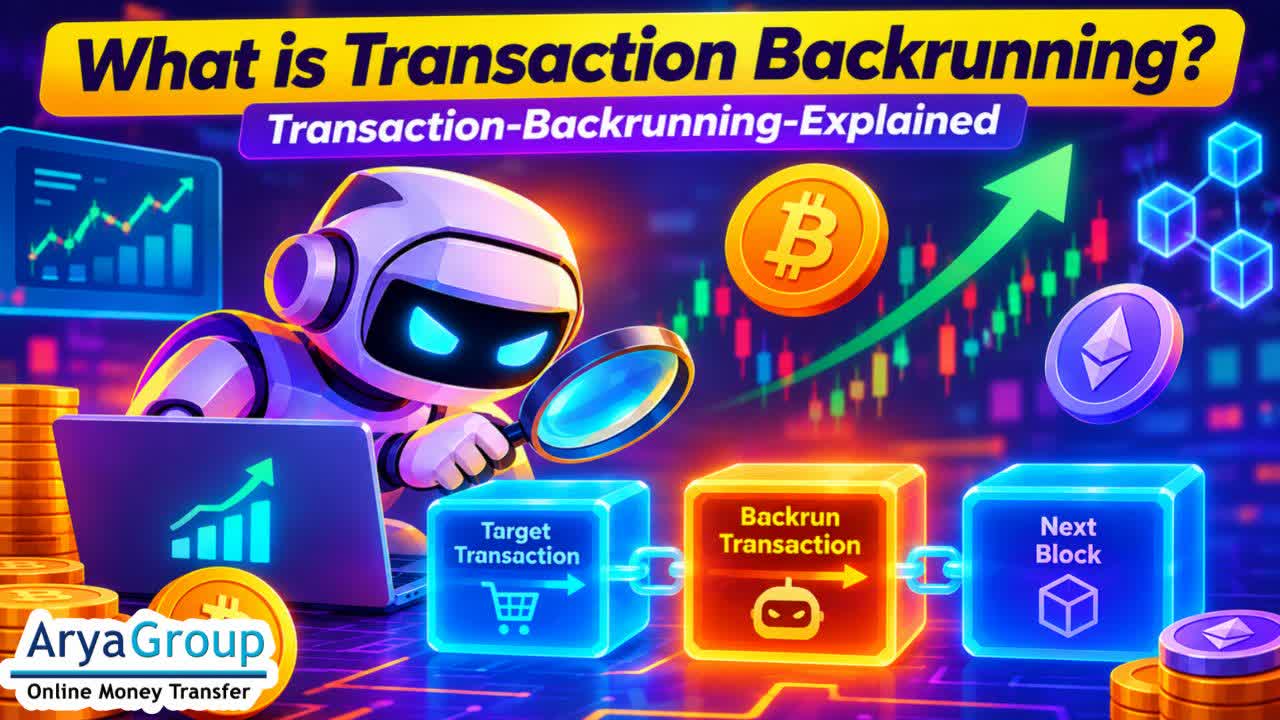
Transaction backrunning is an activity in cryptocurrency markets where a participant places a transaction immediately after another transaction in the blockchain's transaction order. The goal is usually to take advantage of an opportunity created by the first transaction.
It is closely connected to MEV, or Maximal Extractable Value, which refers to the additional value that can potentially be obtained by controlling or influencing the ordering of transactions within a blockchain block.
For example, imagine that a large trade on a decentralized exchange changes the price of a token. A searcher may detect this transaction and submit another transaction immediately afterward to take advantage of the resulting price difference.
How Backrunning Works
Backrunning generally involves several participants and technologies. Specialized software, often called an MEV bot, continuously monitors pending transactions and blockchain activity for profitable opportunities.
When a potentially valuable transaction is identified, the bot calculates whether another transaction could benefit from the expected market change. If the opportunity appears profitable, the searcher submits a transaction designed to be executed directly after the target transaction.
A simplified process looks like this:
- A user submits a transaction.
- The transaction enters the blockchain's pending transaction environment.
- A searcher identifies a possible opportunity.
- The searcher creates a transaction that depends on the first transaction's expected effect.
- The transaction is positioned immediately after the target transaction.
- Both transactions are included in the blockchain according to the relevant ordering rules.
The backrunner is therefore not necessarily trying to prevent the original transaction. Instead, the strategy depends on the original transaction being executed first.
Backrunning and Arbitrage
One of the most common applications of backrunning is arbitrage.
Suppose a large swap causes the price of a token on one decentralized exchange to move away from its price on another platform. A backrunner can react to that imbalance by buying or selling the asset where it is relatively cheaper or more expensive.
The potential profit comes from the price difference created by the original transaction.
However, profitability is not guaranteed. The searcher must consider transaction fees, network costs, slippage, competition from other MEV participants, and the possibility that the opportunity disappears before execution.
Backrunning vs. Frontrunning
Backrunning and frontrunning are related but fundamentally different strategies.
In frontrunning, a participant attempts to place a transaction before a target transaction so that the target transaction changes the market in a way that benefits the earlier transaction.
In backrunning, the participant places the transaction after the target transaction and attempts to benefit from the market conditions created by it.
Both strategies involve transaction ordering, but their positions relative to the target transaction are different.
The Role of MEV Searchers and Validators
Backrunning opportunities are usually discovered by specialized MEV searchers. These participants use algorithms and automated systems to analyze blockchain activity and identify transactions that may create profitable opportunities.
On some blockchains, validators or block builders play an important role because they determine, directly or indirectly, which transactions are included in a block and in what order. This makes transaction ordering an important part of the MEV ecosystem.
Backrunning can contribute to market efficiency when it helps correct price differences between decentralized exchanges. At the same time, intense competition can increase transaction fees and create challenges for ordinary users.
Why Does Transaction Backrunning Matter?
Transaction backrunning demonstrates that blockchain transactions are not always economically independent events. Their position inside a block can influence the outcome and create opportunities for sophisticated participants.
For users, understanding backrunning is useful because it explains some of the hidden dynamics behind decentralized exchange trading, transaction fees, and MEV.
For developers and blockchain researchers, it also raises important questions about fair transaction ordering, network design, and how decentralized systems can balance efficiency with equal access to market opportunities.
The Future of Backrunning
As decentralized finance continues to develop, transaction backrunning is likely to remain an important part of the MEV landscape. Improvements in transaction privacy, block-building systems, and MEV-aware protocols may change how these strategies operate.
Ultimately, backrunning is an example of how information, timing, and transaction ordering can have real economic consequences on public blockchains.
Add New Comment