


Gold Prices Surge
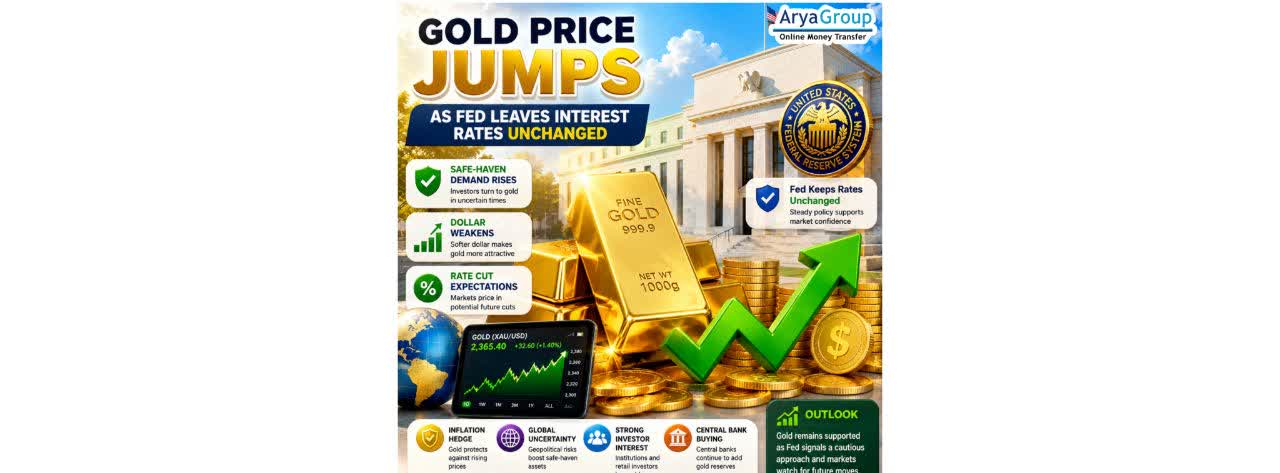
Gold prices recorded a strong rally after the U.S. Federal Reserve announced that it would leave interest rates unchanged at its latest policy meeting. The decision was widely expected by financial markets, but investors reacted positively as the central bank signaled a cautious approach toward future monetary policy. The announcement increased demand for gold, helping the precious metal move higher as traders reassessed the outlook for inflation, economic growth, and future interest rate decisions. The Federal Reserve plays a crucial role in shaping global financial markets. Its decisions on interest rates influence borrowing costs, consumer spending, business investment, and currency values around the world. Whenever the central bank changes—or decides not to change—its benchmark interest rate, investors closely evaluate what the move could mean for stocks, bonds, commodities, and currencies. By keeping rates unchanged, the Fed indicated that it is continuing to monitor economic conditions before making additional policy adjustments. While inflation has moderated compared with previous years, policymakers remain focused on ensuring that price growth stays under control without slowing the economy too aggressively. This balanced approach was interpreted by many investors as supportive for gold prices. Gold is traditionally considered one of the world's safest investment assets. During periods of economic uncertainty or geopolitical instability, investors often shift part of their portfolios into gold because it has historically preserved value better than many other financial assets. Even when financial markets remain stable, expectations that interest rates could eventually decline often make gold more attractive. One of the main reasons is that gold does not generate interest or dividend income. When interest rates are high, investors may prefer bonds or savings accounts that provide regular returns. However, when rates stop rising—or markets expect future cuts—the opportunity cost of holding gold decreases. As a result, investor demand for the precious metal usually strengthens. Following the Federal Reserve's announcement, many traders increased their exposure to gold futures and exchange-traded funds backed by physical bullion. Institutional investors also viewed the Fed's cautious tone as a signal that monetary policy may become more supportive if economic growth weakens in the coming months. This expectation encouraged additional buying across precious metal markets. The U.S. dollar also plays a significant role in determining gold prices. Because gold is traded internationally in dollars, movements in the U.S. currency often influence global demand. A softer dollar generally makes gold less expensive for buyers using other currencies, increasing international demand and supporting higher prices. Market participants closely watched currency markets following the Fed meeting as they assessed the impact of the central bank's statement. Inflation expectations continue to remain an important driver of gold prices. Although inflation has eased from previous highs, many economists believe that price pressures could remain above long-term targets for some time. Gold has long been viewed as a hedge against inflation because it tends to retain purchasing power during periods when the value of paper currencies declines.
Geopolitical uncertainty has also contributed to the recent strength in gold. Ongoing conflicts, trade disputes, and global political developments continue to create uncertainty for investors. In times like these, demand for defensive assets often increases, benefiting both gold and other traditional safe-haven investments. Despite the recent rally, analysts caution that gold prices could remain volatile. Upcoming economic reports, inflation data, employment figures, and future comments from Federal Reserve officials may significantly influence market expectations. Stronger-than-expected economic data could reduce expectations for future rate cuts, while weaker data might strengthen the case for easier monetary policy and provide additional support for gold. Many market experts believe the long-term outlook for gold remains constructive. Central banks around the world continue to increase their gold reserves, while retail investors are showing renewed interest in precious metals as part of diversified investment portfolios. Continued geopolitical risks and uncertainty surrounding global economic growth may also provide ongoing support for gold prices. Looking ahead, investors will closely monitor every Federal Reserve meeting, inflation report, and employment release for clues about the future direction of monetary policy. While no one can predict short-term price movements with certainty, gold is expected to remain one of the most closely watched assets in global financial markets. The latest price increase demonstrates that investor confidence in gold remains strong whenever uncertainty surrounds interest rates and the broader economic outlook. Whether the rally continues will depend on future economic data, central bank decisions, and developments across global markets.

Add New Comment